
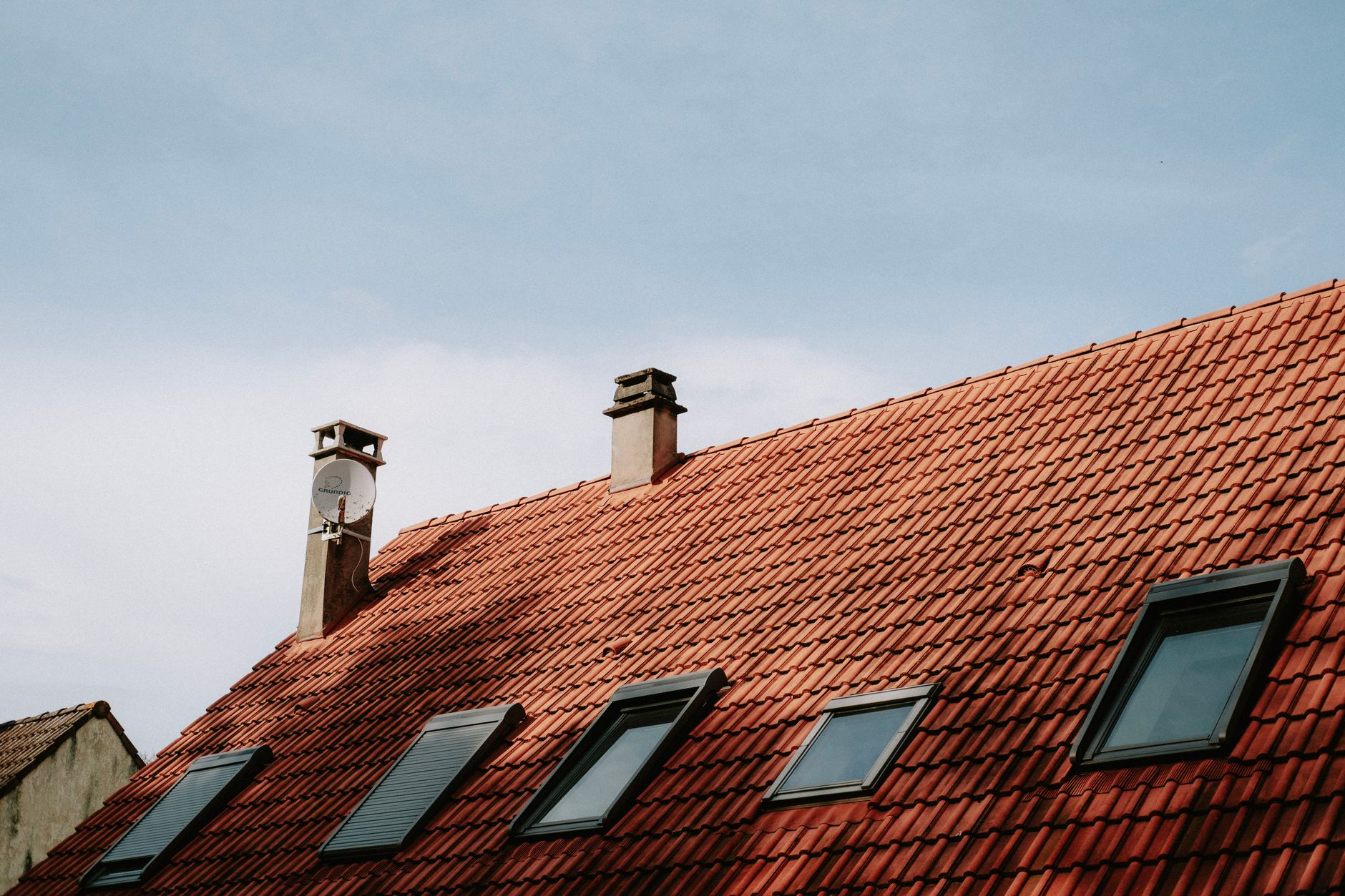
Clay tile, iron damper, mortar crown: the chimney of an older house, filmed for the sale
Request the sale inspection
Give us the street, the year the house went up if you know it, and whether you are buying or selling.
Five parts of an older chimney, and how each one ages
A masonry chimney from before 1980 is built in layers. Each layer wears on its own schedule, and each has a typical failure we look for when the house is being sold.
None of these show from the living room. A chimney can draw well, look tidy and still carry two or three of them, which is why the sale visit goes up the flue rather than stopping at the hearth.
- Clay flue tile: square sections stacked with mortar joints. Shaking and heat shift them, and the gaps let hot gas reach the brick.
- Throat damper: a cast iron plate on a hinge just above the firebox. Coastal damp rusts the plate and the pivot until it sticks or no longer closes.
- Smoke chamber: the sloped brick funnel above the damper. Older ones were left rough, so deposits build up on the steps.
- Mortar crown: the slab on top of the stack. Many were thin to begin with, and sun and salt open cracks across them.
- Flashing: the metal where the roof meets the brick. Each reroof disturbs it, and older houses have had several.
What our Level 2 adds on a house this age
NFPA 211, the chimney standard most inspectors work from, names a Level 2 for a property transfer. On an older house we treat it as a record of five decades of use, since nobody at the closing knows how hard the last owners burned or how often they swept.
The camera is the part that matters. It travels the lining from the smoke chamber to the top, and we pause at every joint and every change in the tile. We also look at the chimney where it crosses the attic, view the top from the roof and check the hearth extension and the clearances to the mantel. Every finding goes in the report with a photo and a still from the video, written so a buyer with no chimney background can follow it.
When in the sale to book it
Sellers of older houses do well to book before listing. A known crack with a written price beside it reads very differently to a buyer than a surprise in the middle of escrow. Buyers book once they are in contract, early enough that the findings can shape the repair talks.
The season matters too. A flue that burned all winter is coated in soot that hides cracks, so a sweep before the camera gives a cleaner picture. A sale in summer usually finds the flue dry and quiet, which suits the camera.
After the report
Each finding is marked as sound, to watch, or to fix before the next fire. Where we publish a price for the fix, it sits beside the finding. For work we do not publish, such as relining a cracked clay flue or recasting a crown, we send a separate written figure so both sides have a number to work with.
Sale inspection prices
One fireplace and one flue per price. Add a line for each extra fireplace, or for a furnace flue sharing the stack.
- Full flue filmed for a sale (Level 2)
- $400
- Yearly look, no camera (Level 1)
- $170
Repairs found during the sale get their own written figure. You decide on them later, not during the visit.
Sale questions on older houses
The house dates from 1965 and nobody has lit the fireplace for years. Is the camera still worth it?
It is. An idle fireplace hides more than a used one, because nobody has watched how it draws. Disuse also invites nests, rust on the damper and water damage from an uncapped top.
What if the flue has no liner at all?
Some older chimneys were built with bare brick inside. The report says so plainly, and we give a written figure for a new liner so the buyer and seller can decide who handles it.
Can the sweep and the inspection happen on one visit?
Yes, and on a flue that saw heavy use last winter we suggest it. The sweep runs from $430 and goes first, so the camera sees the tile instead of the soot.
Who sees the report?
Whoever books names the people to copy. Buyers often include both agents; sellers often keep it for the listing file. We send it to the names you give us and no one else.
Is a chimney on an older house likely to fail?
Not likely, just more likely to carry wear. Most older chimneys we film need one or two repairs, not a rebuild. The point of the visit is to know which ones before closing.
Older house, firm closing date?
Use the contact page to name the street and your side of the sale. We will set the camera visit and send the report to the people you list.
Call (657) 222-3240