
Seal the roof joint before the first storm
Pick a Month for This Job
Tell us the address, the appliance and the month that suits. We call back from Huntington Beach with a date.
What the Job Covers
Rain season shows a flashing fault; summer is when it should be fixed. The seam where the stack leaves the roof is covered by layered metal, some tucked below the roofing, some set into a slot in the mortar. Rust, lifted edges and dried caulk let water slip behind it. We pull the tired metal, cut new slots, fit fresh pieces and seal them. A roof visit sets the price.
Why the roof line leaks
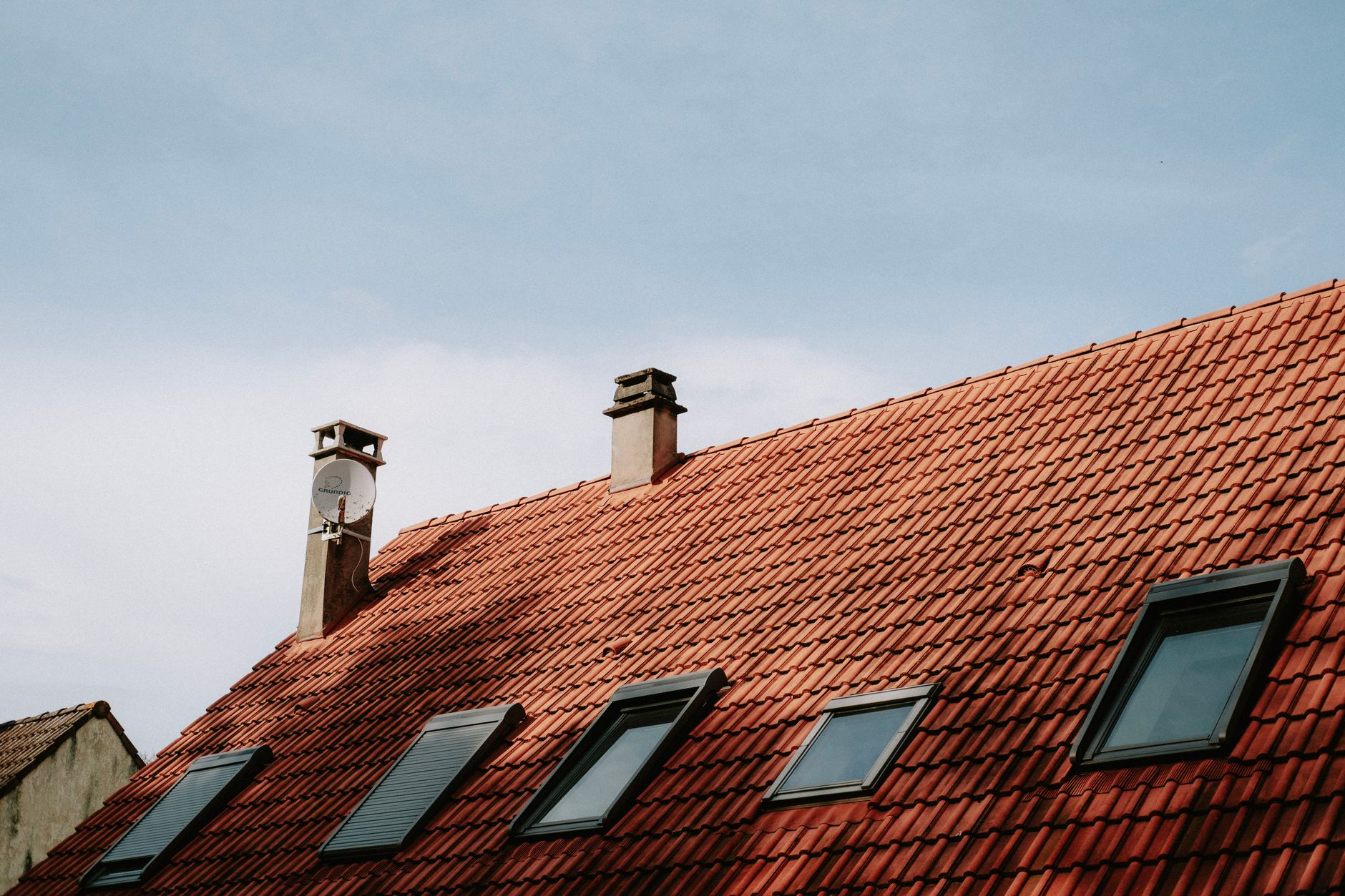
Flashing is the metal that turns the corner where chimney and roof meet, and it is a frequent source of chimney leaks. Trouble starts because the two parts live different lives. Roof framing swells and shrinks with heat and damp, the masonry barely shifts, and over the years the seam between them opens. Sealant smeared along that seam dries and cracks in the summer sun. Old flashing tucked into the brick loses its grip when the mortar holding it softens. On the coast, thin steel flashing also rusts at its edges. The first sign is often a stain on the ceiling near the chimney after a heavy storm, sometimes months after the first water got in, since wood soaks up the early leaks without showing them. By the time paint bubbles, the decking under the shingles may already be soft, and that wood has to be replaced along with the metal.
The order of work follows the weather. Find the leak during or just after a rain, when the water path is fresh. Fix it in the dry months, spring to early fall, when the roof can be opened without letting more rain in. That is also when a roofer is easier to line up if the shingles around the chimney need replacing. We trace a leak with a hose before cutting any metal, since water that shows up at the flashing may be coming through the crown or the brick above it. Where the flashing is the cause, it is replaced with new step pieces along the sides and counter pieces set into the brick over them. If the shingles have only a few winters left, we say so, because new flashing on a tired roof means paying twice. The flashing price comes on its own paper once the cause is clear.
Crickets for wide chimneys
A chimney set across the slope of a roof holds back whatever runs down toward it: rain, leaves, palm fronds and, in the fall, the dust and debris the wind brings in. On a narrow chimney the water finds its own way around. On a wide one it pools against the upslope face, and flashing that would hold up anywhere else leaks there. A cricket is the answer. It is a small framed ridge, covered with roofing and flashing, built on the high side so water parts and flows past the chimney instead of sitting against it. A standalone cricket is $460 to $1,035 here. Built together with a full flashing replacement, which is the usual pairing since the flashing on that side has to come up anyway, the price is $690 to $1,700. Both figures are this site's published ranges, and your written price shows where the job sits inside them.
Whether a chimney needs a cricket depends on its width, where it sits on the roof and how steep the pitch is. We look at that on the visit and tell you plainly whether a cricket would help or whether new flashing alone will do. Both jobs belong in the April to September window. Flashing and crickets are also among the items a buyer's inspector writes up on an older house, so if you are selling, the up to code repairs page explains how those fixes are usually handled in a sale. For any leak near the chimney, tell us which room shows the water, what the roof is covered with, tile, shingle or flat, and whether wind seems to make it worse. That lets us bring the right flashing stock and leave time in the visit for the hose test, which is slow work and cannot be rushed.
How Malone Chimney Works Plans the Work
Booked by Season
Fire-ready jobs in fall, repairs in the dry months
Dated Reports
Photos and findings sorted by when they matter
Price on Paper
Repairs and installs agreed in writing first
Next Date Noted
We suggest when the next look makes sense
Chimney Flashing Repair on the city route
Pick a city to see how its housing and weather change the timing for this job.
CA
Chimney Flashing Repair in Huntington Beach
Two calendars share this town: 69% of homes predate 1980, so a 1960s brick firebox may sit two streets from a factory-built metal one. Our September list fits either, with sweep, damper, liner and cap ticked off in that order.
See the city pageCA
Chimney Flashing Repair in Westminster
Built mostly before 1980, at 76%, with another 4% older than 1950, these flues have logged many winters. We like them swept in September, then the damper and crown noted on a dated sheet before the cold months.
See the city pageCA
Chimney Flashing Repair in Costa Mesa
One brick stack per postwar tract house, steel inside it but decades old, is the common pattern here. Gas rebuilds and condos take a different visit, so our fall sheet splits two ways: mortar and crown, or burner and vent.
See the city pageCA
Chimney Flashing Repair in Seal Beach
Malone's fall card for this town reads vent, metal flue, cap. Fireplaces here, where present, tend to be gas or factory-built; 89% of homes predate 1980, and Leisure World, a co-op Ross Cortese opened in 1962, holds many of them.
See the city pageOther Jobs on the Calendar
Chimney Sweep
Early autumn brushing of the flue, so the first cold evening of the season starts with clean tile and an open draft.
See the detailsChimney Inspection
A yearly Level 1 look at the reachable parts, timed so any repair fits in before winter rain.
See the detailsChimney Repair
Off-season fixes to tile, joints, crown and cap, scheduled for spring or summer while the fireplace sits idle.
See the detailsFireplace Inspection
Firebox, damper, doors and hearth looked over from inside the room, the parts you use every winter evening.
See the detailsFireplace Repair
Firebrick, joints, doors and damper put back in order during the warm months, ready for the first fall fire.
See the detailsChimney Level 2 Inspection
A camera run up the full flue on record, plus a check where the stack meets hidden framing.
See the detailsChimney Cap Installation
A metal hood with screen sides for the flue top, ideally fitted before winter storms and the spring nesting run.
See the detailsChimney Masonry Repair
Soft joints and spalled brick repaired in the dry half of the year, when new mortar can cure slowly.
See the detailsChimney Rebuilds
A stack too damaged to patch is taken down and laid up again, planned for the long dry months.
See the detailsFireplace Cleaning
Ash, soot and stale smell cleared from the firebox at season's end, so summer heat does not bake them in.
See the detailsGas Fireplace Cleaning
A pre-season service for gas units: burner, pilot, glass and vent cleaned before the remote comes out in November.
See the detailsGas Fireplace Repair
Gas units that misbehave on the first cold night, traced to the faulty part and put right.
See the detailsFireplace Remodel
New face, mantel or fuel for an old fireplace, designed over winter and built in the warm months.
See the detailsFireplace Inserts
A sealed wood or gas box set into the existing opening, fitted in summer so it is ready when nights turn cold.
See the detailsPellet Stove Repair
Pellet units cleaned and repaired before the cold months, when replacement parts are slowest to arrive.
See the detailsWood Stove Repair
Gaskets, baffles, brick and glass renewed in spring, so the stove seals tight when fall comes back.
See the detailsGas Logs
Ceramic log sets on a gas burner, fitted before November so the fireplace works through every no-burn day.
See the detailsChimney Seismic Retrofit
Bracing or a lighter top for an older brick stack, done in the dry season ahead of the next quake.
See the detailsChimney Crown Repair
The mortar top of the chimney resealed or recast in summer, before rain works into its cracks.
See the detailsDryer Vent Cleaning
Lint cleared from the dryer duct, a yearly job worth pairing with the fall chimney visit.
See the detailsChimney Liner Installation
A stainless liner fitted in the off-season when a camera finds broken tile or an appliance needs a correctly sized flue.
See the detailsChimney Leak Repair
Water coming in at the chimney traced during the rainy months and repaired once the roof dries out.
See the detailsChimney Waterproofing
A vapor-open repellent on brick that is already sound, applied in late summer ahead of the rain.
See the detailsChimney Damper Repair
A stiff, rusted or warped damper fixed before fall, so the flue opens fully for the first fire.
See the detailsChimney Chase Cover
A made-to-measure metal lid for a framed chimney, replaced in summer before a rusted one lets winter rain inside.
See the details